
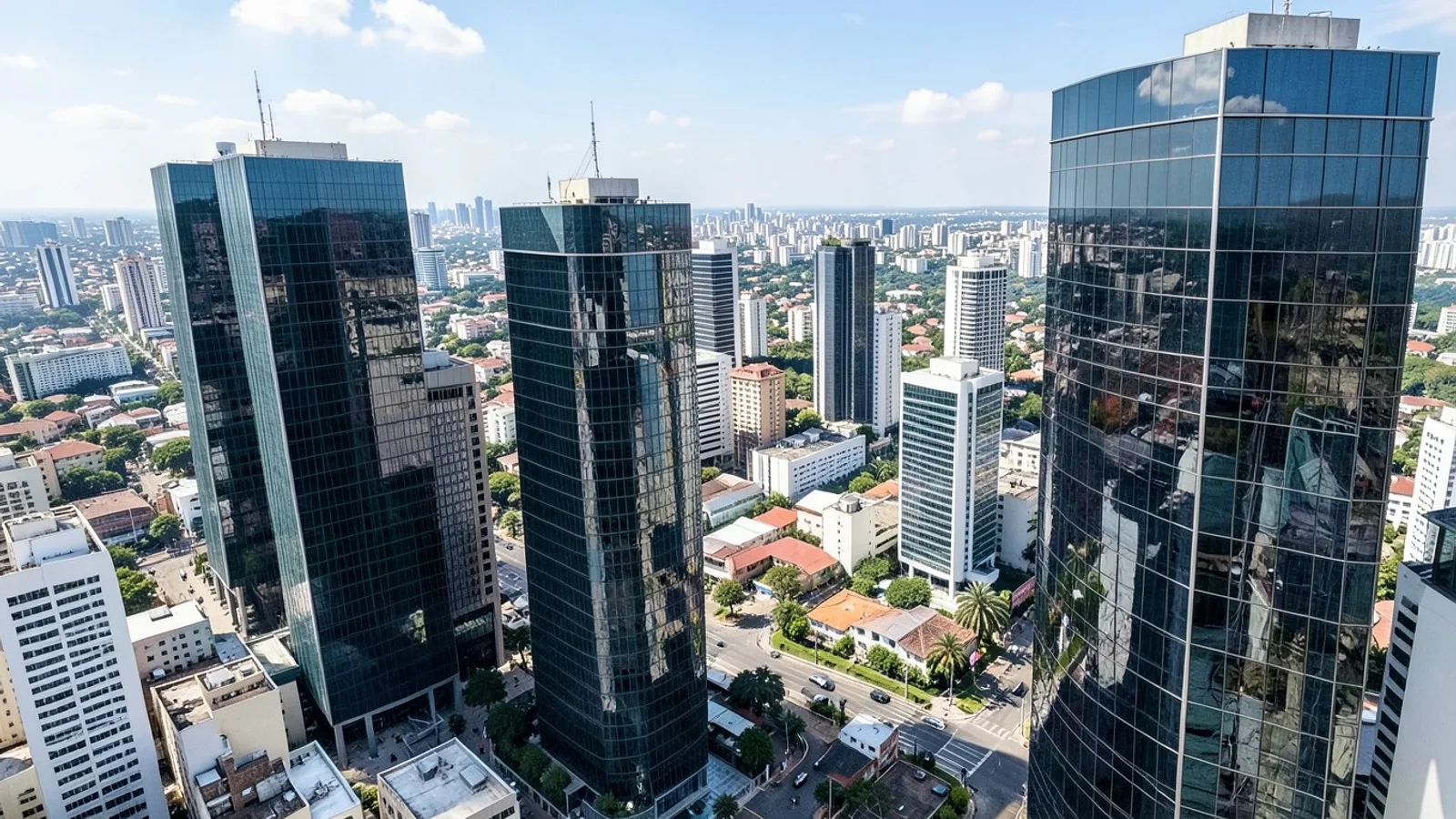
Managing one's contribution history and seeking the recognition of social security rights represent decisive stages in the professional and personal lives of those living in São Paulo. As the state capital and home to a population of 11,904,961 inhabitants, the city concentrates an immense diversity of occupations, bringing together workers from heavy industry, wholesale and retail trade, corporate services, technology, transportation, and healthcare. In such a dynamic socioeconomic environment, work careers rarely follow a uniform path: it is common for people to alternate between formal employment contracts, working as independent service providers, periods as individual micro-entrepreneurs, and stretches dedicated to activities with direct exposure to unhealthy conditions. Faced with this multifaceted scenario, consulting a social security lawyer makes it possible to thoroughly examine each contribution, locate registration omissions, and understand the regulatory requirements surrounding the granting of benefits and allowances. For those seeking guidance on how to take the first steps and organize their documentation, the main service page provides essential information to clarify preliminary questions.
Seeking specialized legal counsel in the field of Social Security should not occur only when a worker reaches an advanced age or suddenly finds themselves unable to work due to illness or an accident. The preventive work carried out by social security lawyers makes it possible to identify inconsistencies in government records in advance that, if ignored, often result in the summary denial of claims or substantial financial losses in the calculation of the initial monthly benefit amount. Gaps in past employment records, missing termination dates for expired contracts, and contributions made below the minimum amount required by national legislation are frequent hurdles in the lives of São Paulo workers. Addressing these issues before submitting an administrative application protects the assets of those who have contributed over decades and ensures that every month worked is effectively counted toward future benefits.
Contribution history assessment and transition rules in the capital
The far-reaching changes made to the country's constitutional and legislative framework have significantly altered the requirements for retirement under the General Social Security Regime. Applying for the benefit is no longer a simple matter of counting the time elapsed on the calendar; it now calls for complex mathematical simulations across the various transition rules in force. In day-to-day practice in the city of São Paulo, the advice of a social security lawyer includes a careful analysis of the viability of options such as the points system that combines age and contribution time, the fifty percent and one hundred percent toll models applied to the time that was missing for the benefit to be granted, and the progressive minimum age rule. A careful comparative assessment keeps the insured person from making a hasty choice based on a reductive formula, pointing to the exact option that delivers the best economically sustainable benefit under the law.
One of the pillars of this assessment is the regularization of the National Social Information Registry (CNIS), administered by the National Social Security Institute. In many cases, the official databases show pending-issue flags or informational gaps left by employers that closed down or failed to pay the amounts owed to the public coffers. A social security lawyer in São Paulo examines the inconsistencies in the statement and identifies the contemporaneous documents needed to fill in the missing data and register work periods that were not entered automatically into the government system.
Another highly relevant aspect is proving time worked under special conditions. Workers exposed to corrosive chemical agents, excessive heat, continuous industrial noise, mineral dust or infectious biological agents in hospitals and care facilities are entitled to differentiated counting of service time or to special retirement itself. For this classification to be validated, it is essential to check that the Social Security Occupational Profile (PPP) is in order and to compare it against the environmental reports issued by the companies. When the insured person obtains recognition of salary amounts or a declaration of an employment relationship in a final decision from the Labour Court within the Regional Labour Court of the 2nd Region (TRT-2), the professional checks whether the effects of that decision have been reported and registered with the federal social security agency, so that the contribution salary is increased and the final calculation of the benefit is directly affected.
Challenges to INSS denials and applicable procedural avenues
The massive volume of requests reviewed daily by the National Social Security Institute results, in many situations, in administrative denials that cause great distress to applicants. Calculation errors, flaws in the evaluation of technical reports, and unfavorable medical examinations are recurring occurrences faced by the population. On these occasions, the intervention of a social security lawyer is essential to break down the technical reasoning adopted by the agency and determine the appropriate legal course of action, whether by filing an ordinary appeal before administrative collegiate bodies or by bringing a lawsuit within the Federal Court and its Federal Small Claims Court.
Among the main disputes that warrant continuous technical assistance in the social security sphere, the following stand out:
- Disability benefits and challenging medical examinations: challenging premature discharges or refusals to grant temporary disability benefits and permanent disability retirement, instructing the case with detailed clinical reports, hospitalization records, imaging examination reports, and ongoing medical prescriptions to support the evaluation by a court-appointed medical expert trusted by the judge;
- Continuous Cash Benefit (BPC/LOAS): defending assistance claims guaranteed to elderly individuals aged 65 and over and to people with long-term disabilities in situations of proven social vulnerability, demonstrating the composition of essential costs and the actual socioeconomic condition of the family unit;
- Survivor pension and proof of financial dependency: full demonstration of the deceased policyholder's insured status and documentary proof of a public, continuous, and lasting cohabitation in a common-law marriage, making up for any lack of formal certificates through tax records, joint accounts, and credible witness testimony;
- Registration of rural work or family farm regime: locating old certificates, agricultural contracts, and rural producer invoices for workers who migrated from the countryside to the capital, enabling the inclusion of this rural time to qualify for hybrid pensions;
- Review of active retirement pensions and survivor benefits: verifying the calculation breakdown and grant letters to identify the disregard of properly paid contributions, the mistaken application of financial adjustment indices, or the omission of periods recognized by the courts.
When the administrative sphere rejects legitimate requests, filing lawsuits in the Federal Court ensures impartial expert examinations and a broad evidentiary proceeding under adversarial scrutiny. Regarding complementary claims of an inheritance nature, property divisions, or the issuance of civil judicial authorizations that indirectly affect pension entitlement, jurisdiction lies with the State Court through the São Paulo State Court of Justice. Should there be a need to standardize federal or constitutional matters arising from these disputes, proceedings may reach higher courts before the Superior Court of Justice and the Federal Supreme Court. Citizens who demonstrate financial vulnerability may turn to the Public Defender's Office to obtain comprehensive and free legal assistance, while those who hire private representation agree on terms directly with the qualified professional, subject to the ethical guidelines of the Brazilian Bar Association.
Metropolitan connections and employment record regularisation in Greater São Paulo
São Paulo's territorial scale and functional integration create a constant daily circulation of labour with neighbouring municipalities that make up its contiguous metropolitan network. Thousands of workers live in the capital and carry out their productive activities in surrounding cities, while significant numbers of residents from these neighbouring cities travel every day to work in the capital's commercial, industrial, and logistics districts. This continuous mobility results in employment record booklets marked by multiple regionally dispersed employer entries, which demands technical care when consolidating each contribution period.
A striking example of this dynamic occurs in the relationship with Santo André, a municipality located 16.3 km from São Paulo. The strong tradition of that locality's chemical, petrochemical, and metallurgical industrial hub means that many São Paulo residents have significant periods of industrial activity performed in the neighbouring municipality. Over the years and with the closure of former factories, proving hazardous conditions and locating old technical forms becomes a challenge. The work of a social security lawyer makes it possible to examine documents from the time and reconstruct material evidence so that the special period in Santo André is validated in the pension calculation.
Similarly, an intense labour exchange is observed with Diadema, situated 15.5 km from São Paulo. The industrial hubs and logistics and manufacturing enterprises located in Diadema hire workers from the capital and generate contracts that frequently involve rotating shift work, the operation of heavy machinery, and exposure to continuous noise. When occupational accidents occur or illnesses arise that incapacitate employees for their usual duties, technical guidance helps organize employment records and medical reports to ensure the correct filing of occupational disability benefits before the federal agency.
Another evident connection manifests in relation to São Bernardo do Campo, a city located 17.8 km from São Paulo. Known for its concentration of vehicle assembly plants, auto parts companies, and large warehousing centres, São Bernardo do Campo is home to the career paths of insured persons who transitioned between operational roles in manufacturing and subsequent self-employed work in the capital. In such cases, legal support checks individual contribution booklets and analyzes whether there were failures in employer social security remittances from former companies, ensuring that no period is overlooked.
This continuous flow of workers also encompasses other neighbouring and nearby municipalities, such as Taboão da Serra, 18.1 km from the capital, and Carapicuíba, located 20.5 km away. Across all these surrounding localities, the alternation between formal employment contracts in retail and commerce, operational roles in warehouses, and activities as an independent contractor reinforces the importance of a comprehensive review of the social security contribution statement, preventing the geographic dispersion of employers from creating gaps in the calculation of the citizen's pension.
Essential steps for auditing social security records and medical reports
The promptness of the response and the success in granting any social security entitlement before decision-making bodies stem directly from the quality, contemporaneity, and solidity of the documentary evidence presented. Filing an application unaccompanied by essential elements is the primary cause of excessive delays and unfavorable denials. To safeguard their rights preventively, the insured must follow a methodical roadmap for organizing evidence:
- Issuing the full CNIS statement: access Social Security's digital channels to generate the itemized report of contributions and employment relationships, checking whether all contracts have an end date and identifying registration pending status codes that require documentary regularization;
- Thorough review of all Employment Record Books: gather all original physical copies and the digital record of the Employment and Social Security Card, ensuring that the pages for admission, role transfers, annual leave, and general notes keep the annotations visible and free from erasures;
- Locating Social Security payment forms and payment booklets: for periods of activity as an individual contributor, business owner, or voluntary contributor, archive payment forms with legible mechanical authentication, which are crucial documents to validate contributions not incorporated into the government's digital database;
- Retrieval of occupational exposure forms: request from employers where work involving physical, chemical, or biological agents took place the issuance of the Social Security Professional Profile (PPP) signed by legal representatives and grounded in environmental conditions reports from the time;
- Structuring clinical records for disability claims: compile recent medical reports issued by attending healthcare professionals, containing the International Classification of Diseases (ICD), a clear indication of the degree of limitation for habitual work, the onset date of the disability, and supporting supplementary tests;
- Gathering documentary proof of remote periods: if you performed rural work during childhood or youth, organize old civil registry certificates, agricultural loan or partnership agreements, and rural producer invoices to enable counting toward a hybrid retirement.
By compiling these records in an orderly manner, the social security lawyer has robust support to accurately calculate contribution periods, formulate well-founded defenses before public officials, and consistently uphold the insured person's claims before the competent authority.
Ethical safeguards in client service and private connection through the app
The practice of law is subject to rigorous standards of integrity and professional ethics governed by national legislation and the guidelines of the Brazilian Bar Association. When conducting a technical consultation, preparing retirement calculations, or representing an insured person in proceedings before the National Social Security Institute or the Federal Court, the professional acts with independence, balance, and transparency. According to applicable ethical rules, no social security lawyer can make promises regarding outcomes or guarantee the success of a lawsuit, as the final decision rests exclusively with administrative officials and judges vested with jurisdiction.
Financial transparency is another indispensable foundation of this relationship. All amounts pertaining to the provision of legal services must be agreed upon in advance in writing in a formal contract before any action begins. The agreement specifies the stages of representation, any expenses for issuing certificates or expert reports, and the percentages applied to financial sums obtained if the claim is granted, providing security, predictability, and clarity for both parties.
To simplify access to qualified support in São Paulo and allow workers to find legal guidance tailored to their practical needs, our connection app offers a direct, confidential, and free way to report the case. The person explains what happened in their own words, either by recording a voice message or typing continuous text, completely free of charge and without having to log in to the platform beforehand. Then, an assistant organizes the details provided into an objective summary of the case and directs the person to lawyers practicing in the corresponding area of law in their locality.
The decision regarding which professional to contact rests entirely with the user. Lawyers maintain a published profile on the platform detailing their practice areas and respond directly to submitted inquiries. The interaction takes place in a strictly private environment within the app itself and only progresses to a formal consultation when both parties express mutual agreement to move forward, keeping personal contact details protected until that reciprocal confirmation.
If you need to plan your retirement, regularize contribution periods with pending issues on your statement, or challenge the denial of a social security benefit in São Paulo and neighboring municipalities, describe what happened in your own words to choose a social security lawyer you trust on the platform, agree on fees in writing before work begins, and seek recognition of your rights with technical support and complete discretion, without guarantees of outcome.
São Paulo and surroundings
Lawyers who practise in São Paulo also take cases from nearby cities.
How it works
- Tell the case
By voice or text, no sign-in. It takes a few minutes.
- The assistant organises it
Facts, dates and documents become a clear summary.
- You choose the lawyer
Professionals who practise in São Paulo, in alphabetical order.
Legalocal does not recommend or rank professionals: the list follows alphabetical order.
Frequently asked questions about São Paulo
When should I consult a lawyer in São Paulo for retirement planning?
The guidance of a specialist is recommended to analyze the contribution record with the National Social Security Institute, simulate transition rules, and check registration discrepancies before submitting an application in the state capital, which has 11,904,961 inhabitants. Through the app, you describe your case for free by voice or text and choose the professional to speak with in a private setting, agreeing on fees in writing without any promise of results.
How can a specialist assist with special retirement claims for someone who worked in Santo André?
Insured individuals living in São Paulo who were exposed to harmful agents while working in Santo André, 16.3 km away, can rely on a technical review of reports and the Social Security Professional Profile. The professional examines supporting documentation of working conditions to claim special service credit or benefits before the National Social Security Institute, the Federal Court, or the Federal Small Claims Court.
What should a Diadema resident working in São Paulo do if temporary disability benefit is denied?
Faced with a denial from the National Social Security Institute, the insured individual can gather updated medical certificates, exams, and clinical reports to evaluate filing an administrative appeal or bringing a lawsuit before the Federal Court. This assistance clarifies rights for workers traveling between the capital and neighboring municipalities, such as Diadema, located 15.5 km from the city.
How can I consult legal specialists if I have contribution periods in both São Bernardo do Campo and the capital?
Reconstructing a contribution history across different municipalities in the metropolitan area, such as São Bernardo do Campo, 17.8 km from São Paulo, requires reviewing employment record booklets and payment slips. On the platform, you describe your situation without logging in; an assistant summarizes the details and connects you with local legal professionals in the field. The initial conversation is confidential and fees are agreed upon in advance in writing.