
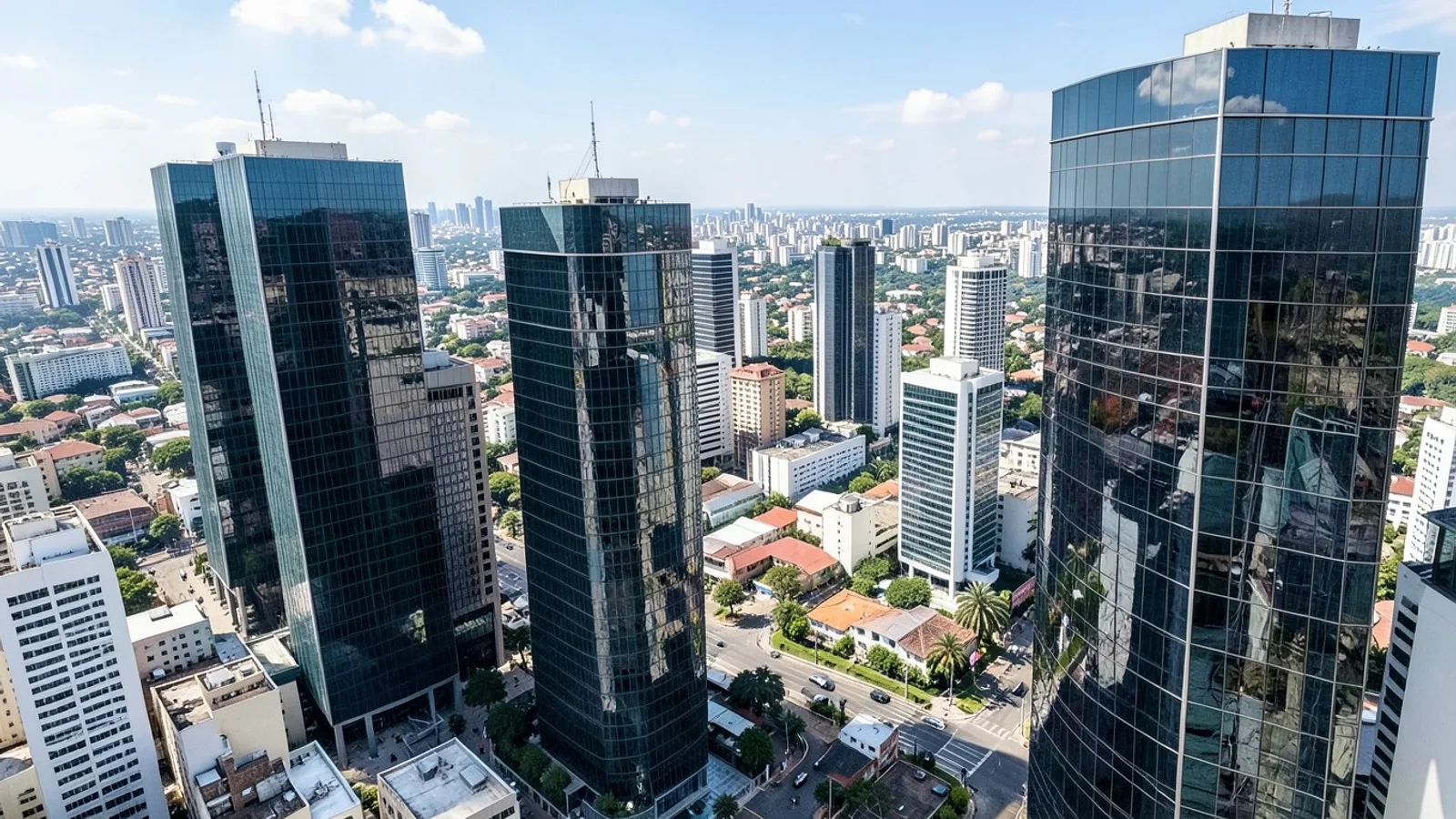
The conduct of criminal investigations, the receipt of summonses to provide testimony at police stations, or the occurrence of pretrial detentions require immediate legal attention and the rigorous application of procedural guarantees. In São Paulo, capital of the state with a population of 11,904,961 inhabitants, the dynamism of social relations and intense urban activity produce complex criminal demands, ranging from preliminary inquiries to ongoing litigation before the Judiciary. The punitive power of the State demands a qualified technical counterweight to ensure the right to a full defense, adversarial proceedings, and the presumption of innocence. In this scenario, the work performed by a criminal defense lawyer constitutes an indispensable pillar to safeguard individual prerogatives enshrined in the Federal Constitution of 1988 and Brazilian criminal legislation. For those who need initial support and wish to understand service options, consulting the home page presents the first steps to guide the search for legal assistance.
The field of Criminal Law deals directly with fundamental human values, notably freedom of movement, the inviolability of privacy, and personal dignity. In this way, the intervention of a criminal defense lawyer is not restricted to formal acts at hearings or mechanical filings in case dockets. It involves an analytical practice that encompasses the review of the legality of restrictive measures, meticulous verification of the chain of custody of physical evidence, and the construction of solid defense theories before the State Court, especially within the Court of Justice of São Paulo, or before the Federal Court, depending on the nature of the alleged offense. All legal assistance must rely on clear ethical parameters, with fees fixed in advance in writing and without any guarantee or promise of a favorable outcome, leaving the impartial and reasoned decision exclusively to the competent judges.
Constitutional prerogatives and immediate technical representation before authorities
There is a common misconception that hiring specialized defense is only necessary after formal charges are filed with the criminal court. In legal practice, the pre-trial phase—conducted through a police investigation or an incident report—is decisive in defining the course of any accusation. Hastily made statements, the inadvertent disclosure of mobile device passwords without a reasoned warrant, or the careless signing of deposition statements can cause irreparable harm to the defense strategy. By intervening from the earliest moments, the criminal defense lawyer advises the person under investigation of their inalienable fundamental rights, such as the constitutional right to remain silent and the express guarantee against self-incrimination.
The active presence of a criminal defense lawyer during the investigative phase safeguards compliance with the rights set forth in the Statute of the Legal Profession, overseen by the Brazilian Bar Association. The qualified professional has the legal prerogative to examine police investigation files of any kind, even when classified as confidential, with the sole exception of ongoing proceedings whose prior disclosure could jeopardize the gathering of evidence. This vigilant intervention prevents abstract assumptions or irregular investigative procedures from serving as the legal basis for invasive measures, such as home searches and temporary or preventive detention.
In situations where an arrest caught in the act occurs, holding a custody hearing constitutes a procedural step that cannot be postponed. Held before the competent judicial authority, this hearing is designed to examine the strict legality of the arrest, the physical and psychological integrity of the detained person, and the actual necessity of maintaining the restrictive measure. Technical defense counsel makes formal representations to demonstrate that precautionary detention is unwarranted, seeking the release from illegal arrests, the granting of provisional release with or without bail, or the application of alternative precautionary measures through sound proof of lawful employment, a known residence, and a favorable personal record.
Developments in criminal proceedings in the State Court and competent jurisdictions
When the formal charge presented by the Public Prosecutor's Office is accepted by the judicial authority, criminal proceedings are formally initiated. The course of the proceedings is then determined by the custodial sentence prescribed in abstract for the charged offense, proceeding under ordinary, summary, or special common procedure. The first and primary instrument of technical defense in this judicial phase is the response to the accusation. In this procedural pleading, the criminal defense lawyer articulates preliminary motions, raises any procedural nullities that occurred during the investigative phase, presents supporting documents, and lists the witnesses who must testify in court before the State Court of São Paulo.
During the evidentiary hearing and trial, technical representation focuses on the examination of witnesses summoned by the parties, allowing the phrasing of follow-up questions aimed at resolving factual contradictions and guiding the accused individual for the judicial interrogation. Challenging inconclusive expert reports, raising well-founded objections regarding photographic or personal identifications carried out without observing the provisions of the Code of Criminal Procedure, and demanding strict legality in documentary evidence prevent convictions grounded on fragile elements. At the end of the evidentiary phase, final arguments in the form of written briefs or oral arguments concentrate requests for acquittal, reclassification of the offense, or mitigation of penalties.
Regarding conduct classified as criminal offenses of lower offensive potential, the procedure is directed to the Special Criminal Court, governed by Law 9.099/1995. Within this sphere focused on diversionary measures, the work of the defense carefully analyzes the advisability of measures such as civil damages settlements, criminal transactions, and the conditional suspension of proceedings. Such alternatives prevent the imposition of custodial sentences, requiring, however, compliance with strict legal conditions that citizens must understand in detail before ratifying any agreement. In turn, in the trial of intentional crimes against life, exclusive jurisdiction belongs to the Jury Court, guaranteed by the Federal Constitution, in which oral argument before the Jury Panel demands thorough evidentiary preparation and irrevocable respect for full defense rights.
If citizens demonstrate financial insufficiency to bear the costs of private hiring without compromising their personal and family livelihood, the Federal Constitution safeguards comprehensive and free assistance provided by the Public Defender's Office. Where private hiring is possible, choosing private defense counsel enables the personalized definition of the technical strategy to be pursued before the Court of Justice of São Paulo and, when applicable, before the Superior Courts, such as the Superior Court of Justice and the Federal Supreme Court.
Jurisdictional competence and criminal interconnectedness in the São Paulo metropolitan area
Often, when conducting searches on the internet under severe emotional stress, a person comes across broad searches or out-of-context references to other distant capitals, such as criminal defense lawyer Porto Alegre. However, in criminal matters, understanding the judicial reality of São Paulo and the strict rules governing territorial jurisdiction established by criminal procedural legislation is decisive. The Code of Criminal Procedure establishes that jurisdiction is determined, primarily, by the place where the offense was consummated or where the last acts of its execution were carried out.
This procedural reality is evident in the ongoing integration between São Paulo and the neighboring municipality of Guarulhos, situated at a distance of 14.1 km. Due to the intense transit of people, vehicles, and goods distribution hubs between the two cities, frequent police investigations and judicial measures occur whose developments involve police authorities and judicial courts of both localities. Attentive technical supervision provided by a criminal defense lawyer prevents the establishment of territorial jurisdictional conflicts and impedes precautionary warrants from being issued or executed in duplicate.
Correspondingly, the dynamic between the capital and the city of Osasco, located 15.9 km from São Paulo, illustrates the need for constant evidentiary vigilance. Acts executing search and seizure warrants, witness hearings, or asset inspections often require the issuance of letters of request and communications between metropolitan police stations. Direct procedural monitoring ensures that intermunicipal proceedings strictly observe defense deadlines and respect the formal boundaries of the judicial district in which the measure is carried out.
Another striking flow manifests in the relationship with São Bernardo do Campo, a municipality situated at a distance of 17.8 km from São Paulo. Demands involving metropolitan cargo transport, tax audits, and investigations into property crimes with ramifications between Greater ABC and the capital of São Paulo require a detailed examination of formal records to determine whether jurisdiction belongs to the Court of Justice of São Paulo at headquarters or to neighboring judicial courts. Accurately understanding territorial divisions prevents delays in the processing of release requests and safeguards the rights of citizens at all procedural stages.
Practical conduct and organization of evidence upon receiving formal summonses
The moment someone is surprised by a police notice, judicial warrant, or order to appear calls for composure and method to prevent the accidental creation of unfavorable evidence. To safeguard your rights and provide accurate factual background to the criminal defense lawyer handling your defense, it is recommended to adopt the following orderly set of precautions:
- Do not make preliminary statements without legal counsel: before answering formal questions posed by police authorities or signing deposition records, exercise the constitutional prerogative to speak privately with your defense counsel;
- Check the details of the formal document: examine the received document with complete attention, noting the number of the police investigation or court proceeding, the issuing department, and the procedural capacity in which you were summoned, clearly distinguishing whether the call is as a witness, a victim, or an investigated person;
- Preserve electronic messages and digital records: store complete conversation histories from messaging applications, email exchanges, telephone call logs, and geolocation records, avoiding deleting files that prove the actual chronological order of events;
- Gather identification documents and proof of lawful occupation: obtain updated copies of a photo identification document, reliable proof of residential address, work booklet, or current service contracts, which are decisive elements to support requests for the revocation of restrictive measures or the granting of provisional release;
- Maintain discretion and do not expose the case on social media: do not post statements, opinions, audio recordings, or screenshots in public settings or digital platforms, safeguarding the confidentiality essential to building and ensuring the effectiveness of the defense strategy;
- Demand a written legal fee contract: make sure that the contractual instrument details the acts covered during the police investigation, court hearings, and any applicable appeals, bearing in mind that ethical standards prohibit unfounded promises of acquittal.
Carefully observing these measures allows the criminal defense lawyer to submit consistent requests before the Public Prosecutor's Office and the Judiciary, preventing prosecutorial overreach and ensuring the integrity of the investigative proceedings.
Professional transparency and secure consultation mediation through the app
The practice of criminal law rests on unconditional professional secrecy, loyalty to the jurisdiction, and strict compliance with the ethical rules of the Brazilian Bar Association. Information entrusted by the client to the professional is protected by legal privilege, creating the necessary confidential environment for events to be detailed with complete transparency and factual precision. In accordance with applicable legislation, no lawyer can promise acquittals, guarantee the granting of release orders, or assure specific procedural outcomes, as sovereign deliberation belongs exclusively to the Judiciary.
Financial transparency is another non-negotiable premise of professional conduct. All legal fees must be agreed upon in detail and set out in a formal contract before defensive activities effectively begin, clearly describing the scope of legal representation at each stage of the investigation, in court, or before appellate courts. If the situation experienced impacts other legal areas, citizens can consult the legal services platform to learn about the corresponding practice areas and obtain structured information for their context.
To facilitate agile, practical contact with professionals in São Paulo without unnecessary barriers, the app provides a secure and direct alternative for anyone seeking technical guidance. The individual recounts what happened in their own words, either by recording a voice message or typing text, free of charge and with no requirement to log in beforehand. An assistant then organizes these accounts into an objective case summary and forwards the request to lawyers handling the relevant criminal practice area in the municipality.
The choice of which professional to contact belongs entirely to the user. Lawyers maintain profiles published on the platform showcasing their practice areas and respond directly to submitted consultation requests. The initial conversation takes place in a private environment within the app itself and only progresses when both parties express mutual agreement, ensuring that personal contact details are never disclosed prior to this consent. If you or someone close to you is facing a police investigation, the execution of a warrant, or legal proceedings in São Paulo and cities across the metropolitan region, describe your situation securely in the app and speak with a criminal defense lawyer to examine the facts and agree on fees in writing before work begins, with full protection of your privacy and without any promise of outcome.
São Paulo and surroundings
Lawyers who practise in São Paulo also take cases from nearby cities.
How it works
- Tell the case
By voice or text, no sign-in. It takes a few minutes.
- The assistant organises it
Facts, dates and documents become a clear summary.
- You choose the lawyer
Professionals who practise in São Paulo, in alphabetical order.
Legalocal does not recommend or rank professionals: the list follows alphabetical order.
Frequently asked questions about São Paulo
How does a criminal lawyer in São Paulo act during a custody hearing or in flagrante arrest?
The professional verifies the legality of the arrest, safeguards the physical integrity of the detained person, and files requests for provisional release with or without bail or the application of precautionary measures before the State Court at the Court of Justice of São Paulo. This technical work also covers occurrences involving individuals detained in the capital or in transit with neighboring cities, such as Guarulhos, located 14.1 km away.
When is it recommended to consult a criminal attorney in São Paulo to monitor a police inquiry?
Assistance from a criminal specialist is recommended right in the initial stages of the investigation, before any formal statement at the police station. The professional ensures essential constitutional prerogatives, such as the right to silence and against self-incrimination, including when investigative steps require inquiries between the capital and surrounding municipalities, such as Osasco, located 15.9 km from São Paulo.
What is the role of a criminal lawyer in demands involving São Paulo and São Bernardo do Campo?
The criminal attorney analyzes the territorial jurisdiction rules established by criminal procedural legislation, which determine the competent court primarily by the place where the investigated offense was consummated. When investigative acts, subpoenas, or depositions cover the capital and São Bernardo do Campo, located 17.8 km away, legal assistance avoids jurisdictional conflicts and prevents undue precautionary restrictions.
How can one find a criminal lawyer in São Paulo using the app?
The person reports what happened in their own words, by voice or text, free of charge and without requiring a login. An assistant organizes the information into an objective summary and directs the person to lawyers handling the criminal area in the municipality. The user chooses which professional to speak with, the conversation takes place in a private environment within the app, and fees are agreed upon in writing before work begins, with no promise of outcome.