
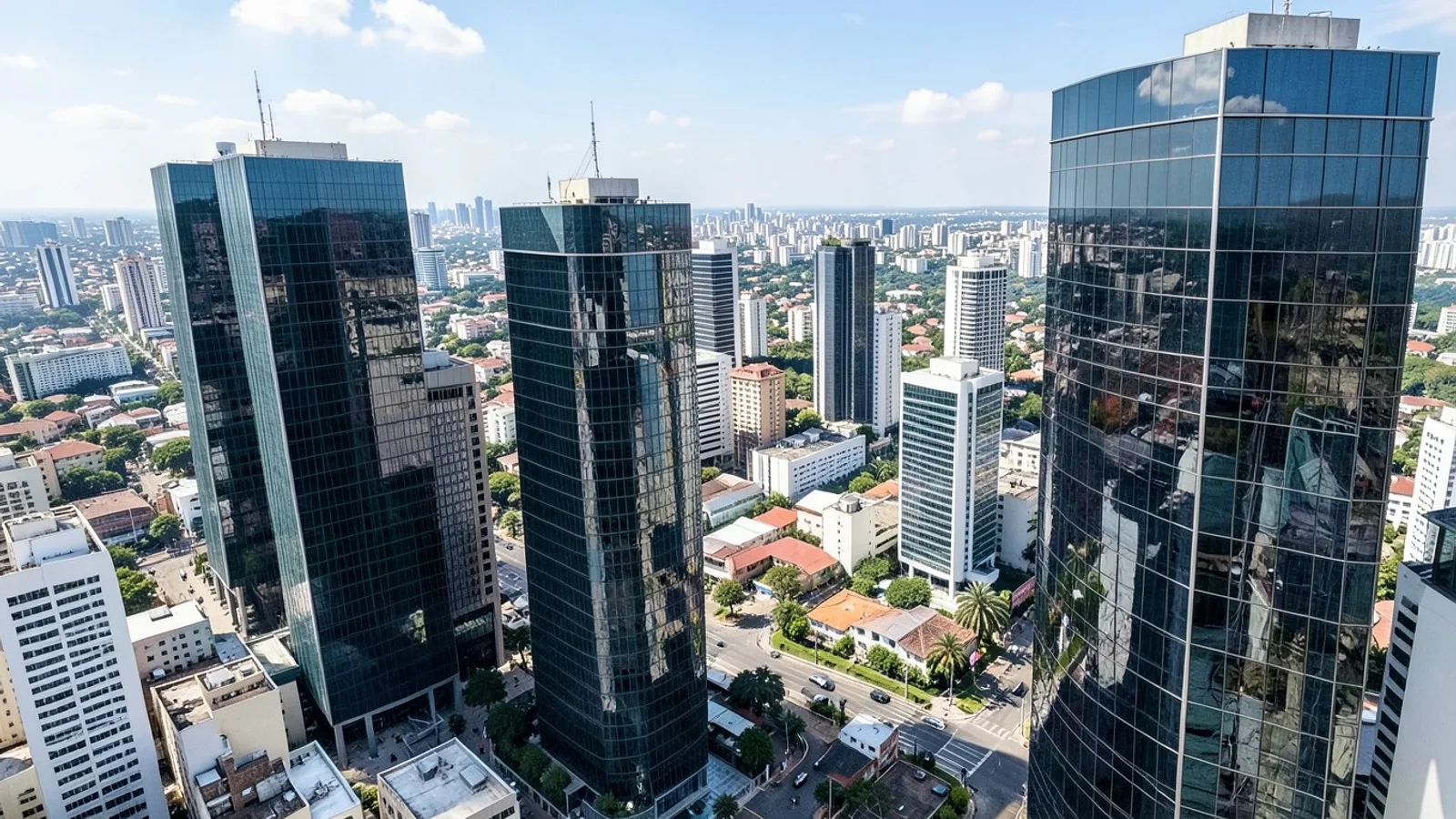
Labor relations play a role of enormous magnitude in the daily life of São Paulo, the state capital that is home to a population of 11,904,961 inhabitants. By virtue of its socioeconomic leadership position, the locality brings together a comprehensive network of productive sectors, encompassing commercial establishments, corporate conglomerates, service providers, hospitals, schools, logistics warehouses, and industrial enterprises. Under the regulation of the Consolidation of Labor Laws and the fundamental precepts of the Federal Constitution of 1988, millions of people enter into employment contracts daily. When impasses arise at the time of contract termination, disputes in the calculation of amounts owed, or disagreements over workplace conditions, the assistance of an employment lawyer makes it possible to check statements, verify rights provided for in collective bargaining agreements, and seek balanced guidance within the scope of the Regional Labour Court of the 2nd Region (TRT-2). For those who need to understand the first steps of service and the applicable procedures, visiting the homepage provides initial navigation guidance.
Technical intervention in employment relations is not limited to filing lawsuits before the Judiciary. Preventive counseling provided by an employment lawyer is essential for advising employees and guiding employers on the faithful observance of regulatory clauses, rest breaks, compensation arrangements, and formalities in the termination of employment. In these evaluations, the professional is guided by the principle of the primacy of reality, under which the factual truth experienced in the daily provision of services prevails over merely formal documents or receipts that do not reflect the reality of the facts. Citizens who demonstrate insufficient financial resources to cover expenses can turn to the Public Defender's Office to secure the full and free defense of their rights, while those seeking private legal assistance establish engagement terms directly with the practitioners.
Employment relations landscape and legal backing in the capital of São Paulo
The legal establishment of an employment relationship requires the simultaneous presence of objective requirements determined by national legislation: the personal provision of services, regularity, remuneration, and legal subordination to the service taker. In the dynamism of São Paulo's labour market, contracts formally labeled as freelance or established through the mandatory creation of an individual legal entity are frequently observed, even though these professionals are subject to strict hours, continuous supervision, and direct orders from supervisors, without any genuine managerial autonomy. In view of this outlook, the work of an employment lawyer consists of analyzing the material elements of the routine performed to verify the existence of an employment relationship before the Labour Court, seeking the appropriate entries in the Employment and Social Security Card.
The proper formalization of the employment bond stems from the factual verification of the relationship and entails the immediate enforceability of essential charges, notably contributions directed to the National Social Security Institute and the regularity of deposits owed to the linked account of the Severance Indemnity Fund, updated according to federal legal criteria. Furthermore, inquiries regarding job role deviation or function accumulation frequently arise when a worker begins performing duties of significantly greater complexity or technical responsibilities not provided for in the original contract, without any equivalent salary compensation. In this scenario, examining pay stubs against collective bargaining agreements entered into by unions makes it possible to identify whether the statutory wage floor and applicable bonuses were properly honored.
Regarding the structure of the Judiciary, individual or collective disputes arising from employment contracts performed in the city of São Paulo are handled before the Labour Courts regionally linked to the Regional Labour Court of the 2nd Region (TRT-2), which covers the capital and municipalities within its labour jurisdiction, with the possibility of an ordinary appeal and subsequent jurisprudential standardization before the Superior Labour Court. All professional practice is governed by the ethical guidelines of the Brazilian Bar Association, with any promise of a favorable outcome or guarantee of winning the case being prohibited, leaving the decision to the competent judges based on the evidence presented in the case records.
Frequent situations in individual disputes and contract terminations
The termination of the employment contract constitutes a critical moment of vulnerability for the worker and requires heightened technical diligence on the part of the employer. Legislation establishes strict legal deadlines for the full settlement of final dues, avoiding financial penalties expressly set forth in consolidated labour laws. In the examination conducted by an employment lawyer, key points of analytical verification stand out:
- Verification of severance pay: verification of the salary balance, prior notice proportional to the length of service (worked or indemnified), accrued and proportional vacation pay with the addition of the constitutional one-third, proportional thirteenth salary, and the delivery of guides for accessing the FGTS with the respective forty percent indemnity and qualification for unemployment insurance benefits;
- Constructive dismissal resulting from serious employer fault: ascertainment of employer faults that make the continuation of the employment relationship unsustainable, such as continuous and habitual delays in wage payments, repeated failure to make FGTS deposits, demanding work that exceeds the employee's strength, or imposing excessive disciplinary strictness, authorizing termination with the same financial effects as a dismissal without cause;
- Overtime and rest periods: thorough analysis of manual, mechanical, or biometric time sheets, assessment of the legality of compensation agreements under the hours bank system, and calculation of partial or total suppression of rest and meal intervals, determining applicable premiums and their reflections on weekly paid rest and severance;
- Unhealthy or hazardous environments: investigation of routine contact with harmful chemical agents, biological agents, or continuous noise levels, as well as habitual proximity to flammable substances, explosives, or high-voltage electrical networks, comparing individual protection conditions and their valid certificates;
- Provisional job security and occupational pathologies: monitoring of employment protection guarantees resulting from leaves mediated by the National Social Security Institute due to typical workplace accidents or occupational diseases, examining the feasibility of reinstatement to the post or compensatory redress for duly demonstrated material and non-material damages.
Careful appraisal of these matters prevents the citizen's rights from being affected by the biennial or five-year statute of limitations established in Article 7, item XXIX, of the Federal Constitution of 1988, which sets a limit of up to two years after the definitive termination of the contract to claim credits relating to the five years prior to the date of filing the lawsuit.
Metropolitan circulation and contractual particularities in Greater São Paulo
As a result of its vast urban scale and dense regional connection, the capital of São Paulo establishes a daily and permanent flow of hiring and movement of professionals with various neighboring cities in its geographic surroundings. Thousands of workers residing in São Paulo perform their duties in contiguous municipalities, just as a significant contingent of residents from surrounding cities routinely travels to work in the capital. This intense territorial mobility requires specialized attention to the rules of procedural jurisdiction of the Labour Courts under the jurisdiction of the Regional Labour Court of the 2nd Region (TRT-2), the framing of collective bargaining agreements, and the full provision of intermunicipal transportation vouchers.
This practical reality is clearly evident in the daily relationship with the municipality of São Caetano do Sul, located just 12.1 km away from São Paulo. The continuous movement of labor between the commercial centers, administrative facilities, and industrial units of the two cities raises frequent questions regarding the application of statutory wage floors and the consideration of commuting periods stipulated by the employer. Technical guidance provided by an employment lawyer helps to determine whether local collective agreements are being applied in accordance with the location where the service is predominantly performed.
Correspondingly, there is a robust integration with the municipality of Guarulhos, located 14.1 km away from the capital. Goods distribution hubs, freight transport fronts, and logistics activities connected to the airport terminal generate contracts frequently requiring night work, continuous rotating shifts, and on-call periods. An employment lawyer thoroughly examines whether compensation schedules were properly agreed upon and whether the time spent on standby or on extraordinary call-outs was paid in strict compliance with statutory premiums.
Another notable flow occurs in relation to the municipality of Osasco, 15.9 km away from São Paulo. The concentration of technology-oriented enterprises, banking operational centers, and telemarketing sectors along this corridor results in contracts with hybrid or on-site arrangements and rigorous enforcement of productivity targets. Under these circumstances, an employment lawyer examines the integrity of remote working hours tracking and the preservation of statutory rest intervals, ensuring that changes to the workplace do not lead to wage losses or overburdening without commensurate compensation.
Recommended procedures for cataloguing records and clarifying facts
The precision of the legal assessment and the certainty of any intended measure before the competent authorities depend directly on the methodical compilation of documentary evidence and the chronological sequence of events. To structure the initial review efficiently and enable consistent calculations of the disputed amounts, adopting the following practical step-by-step approach is recommended:
- Digitise the individual contract documentation: gather all annotated pages of the physical Employment Record Book or issue the complete PDF report of the Digital Employment Record Book, archiving the original contract, role amendments, and promotion or salary adjustment letters;
- Compile pay slips and statements: keep all pay slips, salary receipts, and bank account statements for the receiving account from the last five years of service, cross-referencing the agreed base salary, overtime, variable commissions, and deductions made on the payroll;
- Request the itemised statement of the FGTS account: obtain the updated itemised statement from the bank managing the fund, which makes it possible to verify whether the monthly deposits of eight percent on total earnings were made without interruptions or omissions;
- Gather time records and work schedules: organise legible copies, screenshots, or photographs of attendance sheets, electronic or biometric time-clock records, and work rotas that confirm actual clock-in, clock-out, and meal break times;
- Preserve corporate correspondence and task records: store exchanges of messages via corporate email, written work orders, and messaging app communications with managers that demonstrate demands for overtime hours or tasks requested outside working hours;
- Group medical reports, certificates, and notices: in the event of workplace accidents or illnesses caused by working conditions, separate copies of the Work Accident Notice, ongoing treatment prescriptions, and medical reports issued by healthcare professionals;
- Check for civil or maintenance implications: if the termination impacts immediate personal financial obligations or maintenance payments, organise these commitments to ensure coherent and secure financial planning.
By cataloguing these elements in clear chronological order, the individual provides the legal professional with the essential information required to identify contractual breaches, calculate outstanding entitlements, and solidly support any claims brought before the Labour Court.
Confidential assistance and choice of professionals on the platform
The practice of law is guided by strict compliance with the rules of the Code of Ethics and Discipline of the Brazilian Bar Association. When conducting a preliminary consultation or leading discussions before the Regional Labour Court of the 2nd Region (TRT-2), the employment lawyer has a duty to explain with technical independence the strengths, weaknesses, costs, and the evidentiary proceedings inherent to each measure. This professional is expressly prohibited from guaranteeing or promising the outcome of any legal dispute, as the verdict stems from the sovereign judgment of the magistrates who make up the Judiciary.
Within the scope of private hiring, clarity regarding legal fees constitutes a fundamental principle of mutual security and predictability. The amounts stipulated for preliminary reviews, the percentages due on any employment credits obtained, and the rules governing any procedural or expert expenses must be agreed upon in advance in writing in a legal services agreement before the effective commencement of any work. This formal agreement precisely defines the scope of representation and provides complete peace of mind to both parties.
To simplify access to qualified professionals in São Paulo and enable workers to find guidance tailored to their situation, our application offers a practical, confidential, and direct way to connect. The individual describes what happened in their work routine in their own words, whether by voice message or text, completely free of charge and without the need for prior registration or logging into the tool. An assistant then organizes the provided details into an objective case summary and directs the person to lawyers who handle that specialty in the city.
The choice of which professional to contact rests exclusively with the user. The lawyers maintain a published page on the platform detailing their areas of legal practice and respond directly to submitted inquiries. The initial interaction takes place in an entirely private environment within the application itself and only progresses to a formal consultation when both parties expressly agree to move forward, ensuring that personal contact information remains protected until there is mutual acceptance.
If you have questions regarding the final settlement of your contract termination, uncompensated overtime hours, missing FGTS deposits, or irregularities in the performance of your contract in São Paulo and neighboring municipalities, share what happened in the app in your own words to speak confidentially with an employment lawyer of your choice on the platform, establish fees in writing before work begins, and understand your rights with technical certainty and balance, with no promise of outcome.
São Paulo and surroundings
Lawyers who practise in São Paulo also take cases from nearby cities.
How it works
- Tell the case
By voice or text, no sign-in. It takes a few minutes.
- The assistant organises it
Facts, dates and documents become a clear summary.
- You choose the lawyer
Professionals who practise in São Paulo, in alphabetical order.
Legalocal does not recommend or rank professionals: the list follows alphabetical order.
Frequently asked questions about São Paulo
How can a lawyer in São Paulo analyze my severance calculation?
The professional verifies the severance statement items, including salary balance, notice period, proportional vacation with the constitutional one-third bonus, thirteenth salary, and FGTS slips with the 40% fine, while checking whether disputes fall under the Labour Court within the Regional Labour Court of the 2nd Region (TRT-2).
Can I consult a lawyer if I live in São Paulo and work in São Caetano do Sul?
Yes. Workers who live in São Paulo and commute to neighboring municipalities, such as São Caetano do Sul, 12.1 km away, can clarify issues regarding territorial jurisdiction, collective bargaining agreement applicability, and intercity commuting expenses.
How does connecting with professionals through the app work for someone in São Paulo or Guarulhos?
You describe what happened in your own words, by voice or text, free of charge and without needing to log in. An assistant organizes the information into an objective summary and presents local lawyers in the city and nearby hubs such as Guarulhos, 14.1 km away. Contact is private, and personal data is only shared if both parties agree.
What is the role of a lawyer in disputes between São Paulo and Osasco?
In routines involving travel between the capital and surrounding municipalities, such as Osasco, located 15.9 km away, the professional reviews time records, overtime, and potential transfers, agreeing on fees in writing before starting services and without promising case outcomes.